
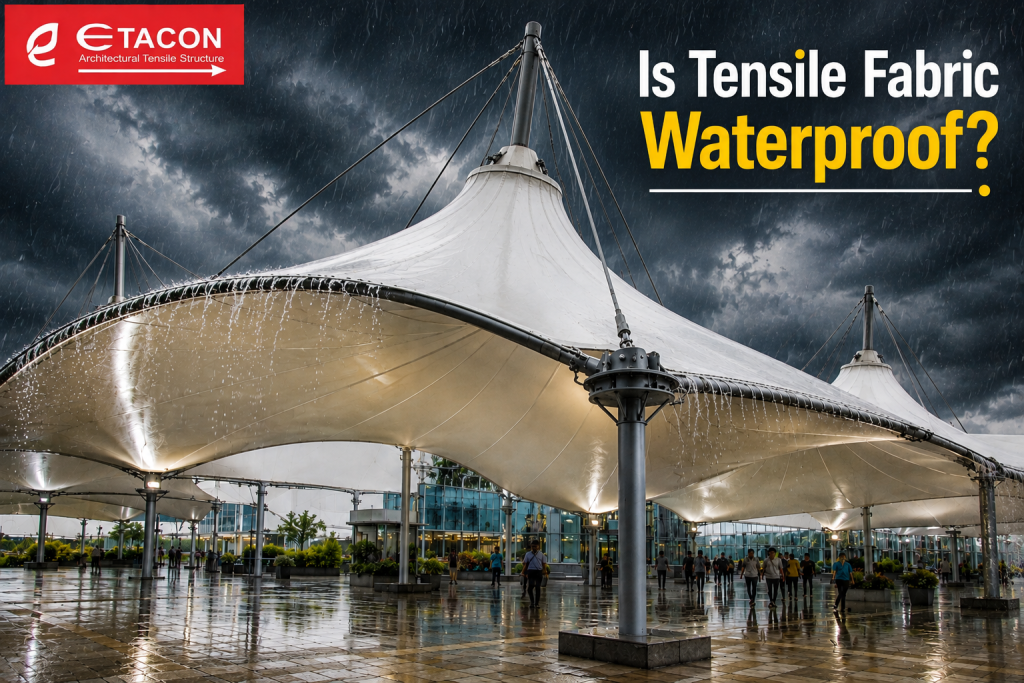
If you’ve been researching tensile structures for a canopy, parking shed, stadium roof, or that stretchy, swooping architectural feature you keep seeing at malls and airports, you’ve probably landed on this question at some point: does this stuff actually keep the rain out?
It’s a fair question. Tensile fabric doesn’t look like a roof in the traditional sense. There’s no concrete, no shingles, no thick layers of anything — just tightly stretched fabric held up by cables and steel supports. So it’s natural to wonder whether it can really hold its own against a downpour.
Short answer: yes, tensile fabric is waterproof — but like most things in construction, the real answer has some nuance worth understanding before you commit to it.
So What Exactly Is Tensile Fabric?
Tensile fabric structures are made from high-strength, flexible membranes — usually PVC-coated polyester or PTFE-coated fiberglass — that are stretched tight across a frame of cables, masts, or steel beams. The tension is what gives the structure its strength and its distinctive curved, sail-like shape.
These aren’t your average tarps. The fabric used in tensile architecture is engineered specifically for durability, weather resistance, and long-term outdoor exposure. It’s the same category of material used for stadium roofs, airport terminals, and large event canopies — so it’s built to handle a lot more than an afternoon drizzle.
Why Tensile Fabric Is Waterproof
The waterproofing comes down to two things: the base material and the coating applied to it.
1. The base fabric itself Most tensile membranes are woven from polyester or fiberglass yarns. On their own, these fabrics are strong but not watertight — the weave still has tiny gaps.
2. The protective coating This is where the real waterproofing happens. Manufacturers coat the woven base with materials like PVC, PTFE (Teflon-based), or PVDF. This coating seals the weave completely, creating a continuous, non-porous surface that water simply can’t pass through. It also adds resistance to UV rays, dirt, and chemical exposure.
Once coated, the fabric becomes fully watertight — not just water-resistant. There’s a difference. Water-resistant materials slow water down or repel it to a degree. Waterproof materials stop it entirely. Properly manufactured tensile membranes fall into the second category.
But Here’s the Nuance: The Seams Matter Just as Much as the Fabric
Here’s something a lot of people don’t realize: the fabric panel itself being waterproof doesn’t automatically mean the entire structure is waterproof. Tensile structures are made of multiple fabric panels stitched or welded together, and the seams are often where leaks actually happen if the installation isn’t done properly.
Good tensile fabric contractors use heat-welding or RF (radio frequency) welding techniques to fuse panels together, rather than relying purely on stitching, which can leave needle holes exposed to water. A properly welded seam is just as waterproof as the fabric itself.
So when someone asks “is tensile fabric waterproof,” the more accurate answer is: the material is waterproof, but the workmanship determines whether the structure stays that way.
What About Ponding and Drainage?
Because tensile structures are curved and tensioned rather than flat, they’re actually designed to shed water quickly. The tension itself prevents water from pooling (“ponding”) on the surface — which is a real design goal, since standing water adds weight and stress to the membrane over time.
Well-engineered tensile canopies are shaped with enough slope and curvature that rainwater runs off naturally toward drainage points, gutters, or the ground, rather than collecting anywhere.
How Long Does the Waterproofing Last?
This depends on the type of coating used:
- PVC-coated polyester: Generally lasts 10–15 years before the coating may need recoating or replacement.
- PTFE-coated fiberglass: Much more durable, often lasting 25–35 years with minimal maintenance.
- PVDF-coated polyester: A mid-range option, typically lasting 15–20 years with good UV and weather resistance.
Over time, coatings can degrade from UV exposure, pollution, or physical wear, which is why periodic inspection and maintenance matter — especially in areas with heavy monsoon rain or intense sun.
A Few Practical Tips If You’re Considering Tensile Fabric
- Ask about the coating type — PTFE will cost more upfront but needs far less maintenance over the structure’s life.
- Check the welding method used for seams, not just the fabric spec sheet.
- Look at the design’s slope and drainage plan — a flat or poorly sloped tensile roof is more prone to ponding issues regardless of fabric quality.
- Ask about warranty coverage for water resistance specifically, not just general structural warranty.
The Bottom Line
Tensile fabric, when properly manufactured and installed, is genuinely waterproof — not just water-resistant. The coated membrane blocks water completely, and the tensioned, curved design helps it shed rain efficiently instead of collecting it. The real risk factor isn’t the fabric itself; it’s the quality of the seams and installation. Choose an experienced fabricator, ask the right questions about coating and welding, and a tensile structure can keep you dry for decades.