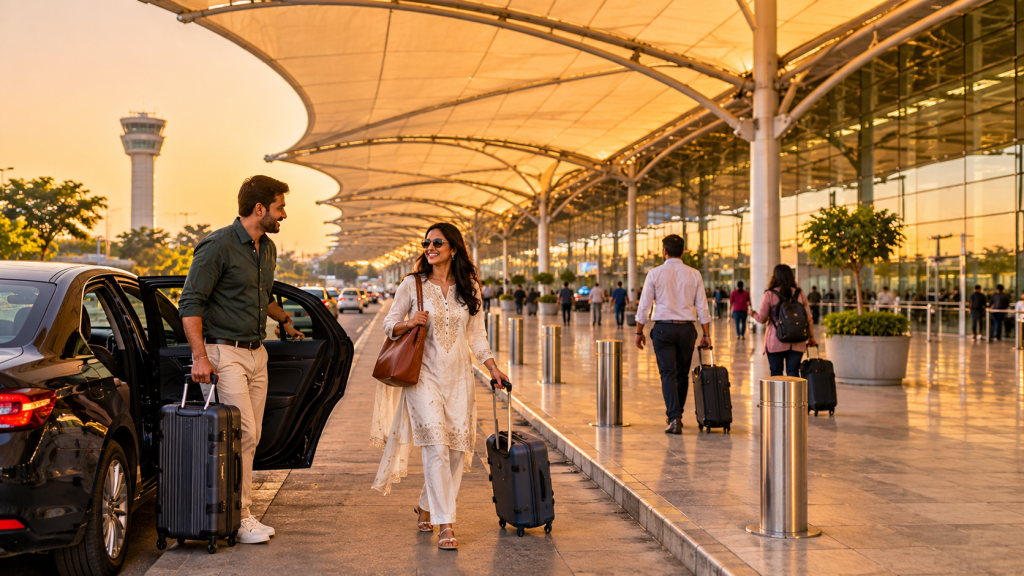
Picture a passenger stepping out of a cab at an airport on a hot afternoon, with luggage in hand and a long walk to the terminal door. Now picture the same moment under a light, translucent canopy that cuts the glare, keeps off the rain, and still lets daylight in.
That small difference is why tensile structures have become a popular choice for airport projects. Airports need large covered areas that look good, go up quickly, and cope with heavy use. Tensile fabric roofing delivers on all three.
Why Airports Choose Tensile Structures
An airport is a high-traffic environment where thousands of people pass through the same entry points every day. The structures there have to do more than provide shade.
- Large spans without heavy support: Tensile roofs cover wide areas with fewer columns, which keeps drop-off zones and walkways open and easy to navigate.
- Lightweight construction: The fabric weighs far less than concrete or metal sheet roofing, which reduces the load on the supporting structure.
- Natural daylight: Translucent membranes let soft, diffused light through, so covered areas feel bright and open instead of dark.
- Faster installation: Because components are fabricated off-site, installation near an active terminal can be planned with less disruption.
- Strong visual identity: Curved, flowing forms give an airport a modern, memorable look.
Where Tensile Structures Are Used at Airports
1. Terminal entrance canopies
The entrance is the first thing a passenger sees. A tensile canopy here gives a clear sense of arrival and protects people moving between vehicles and the building.
2. Drop-off and pick-up shelters
Passengers and families often wait at the kerb. A covered drop-off zone keeps them out of sun and rain, and works well for both departure and arrival areas.
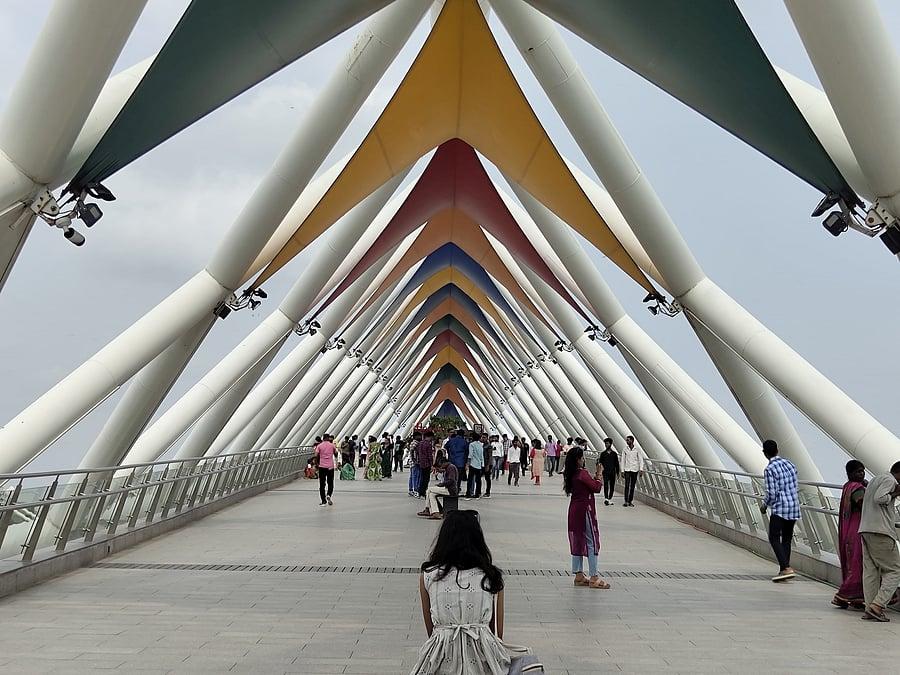
3. Covered walkways
Walkways link terminals, parking areas, metro stations and transport hubs. Tensile covers over these routes make the journey comfortable in every season. See our walkway tensile structures for similar applications.
4. Car parking areas
Airport parking lots need shade that lasts. Tensile car parking structures protect vehicles from sun, rain and dust over long periods. Read more about our car parking tensile structures.
5. Bus and shuttle stops
Shuttle waiting zones get constant use. A tensile shelter provides cover for passengers without needing a heavy built structure.
Choosing the Right Fabric for an Airport Project
Fabric choice affects how long the structure lasts and how it performs.
- PVC-coated polyester (with PVDF finish): A cost-effective, widely used option that resists dirt and UV exposure better than basic coatings.
- PTFE-coated fibreglass: A premium option known for long life and excellent UV resistance, suited to landmark projects.
- Fire-retardant grades: Public buildings such as airports need fabrics that meet the applicable fire safety requirements. Always confirm the fabric’s certification before finalising the order.
The right choice depends on budget, expected lifespan and the look the architect wants.
Key Design Factors to Plan For
Airport projects have a few demands that smaller projects don’t.
- Wind loads: Large open canopies catch wind, so structural design must account for local wind conditions.
- Drainage: The shape of the membrane should shed water cleanly and avoid ponding.
- Fire safety: Material choice and compliance have to be checked early, not at the end.
- Maintenance access: Plan for safe cleaning and inspection over the structure’s lifetime.
- Coordination: Tensile roofs need to work with lighting, signage, drainage and the main building structure.
A good manufacturer will handle design, engineering, fabrication and installation as one process, which keeps these factors from falling between teams.
Benefits at a Glance
| Feature | Benefit for airports |
|---|---|
| Wide spans | Open, uncluttered drop-off zones |
| Translucent fabric | Natural daylight, lower daytime lighting needs |
| Lightweight | Lower structural load |
| Off-site fabrication | Faster, cleaner installation |
| Custom shapes | A strong architectural identity |
How Etacon Can Help
Etacon is a tensile structure manufacturer based in Gurgaon, working on projects across India. Our work covers concept design, structural engineering, steel and fabric fabrication, installation and maintenance contracts. Our team has also delivered projects for clients such as the Air India Training Academy, and works with architects, contractors and government bodies.
If you are planning a terminal canopy, drop-off shelter or covered walkway, our team can share a free design concept and consultation.
Frequently Asked Questions
Are tensile structures suitable for airports?
Yes. They cover large areas with a light structure and let daylight through, which suits entrances, walkways and drop-off zones.
Are tensile structures fire safe?
Fire-retardant fabric grades are available. For public buildings, always check the fabric certification and compliance requirements before choosing.
How long does a tensile structure last?
Lifespan depends on the fabric, the environment and maintenance. Premium fabrics like PTFE last longer than basic coated fabrics.
Can tensile roofs handle heavy rain and wind?
Yes, when engineered correctly. Wind load and drainage are calculated during the design stage.
Can the structure be customised?
Yes. Shape, colour, fabric type and size can all be tailored to the project and the architect’s design.
Get a Free Design Consultation
Planning a tensile canopy or shelter for an airport or any large public space? Talk to the Etacon team for a free concept design and quote.
Get a Quote | Call: +91-9873310328 | Email: sales@etacon.co.in