
Tensile structures have a reputation for being low maintenance, and that’s part of why so many people fall in love with them.
But “low maintenance” isn’t the same thing as “no maintenance.”
Your structure is out there every day, dealing with sun, wind, rain, and whatever dust happens to be in the air. None of that shows up overnight. It builds up slowly, quietly, until one day you notice the fabric doesn’t look quite as sharp as it used to.
The good news is that keeping a tensile structure in great shape doesn’t take much. A few simple habits, done consistently, make all the difference. Here’s what we’d recommend.
1. Clean the Fabric Every So Often
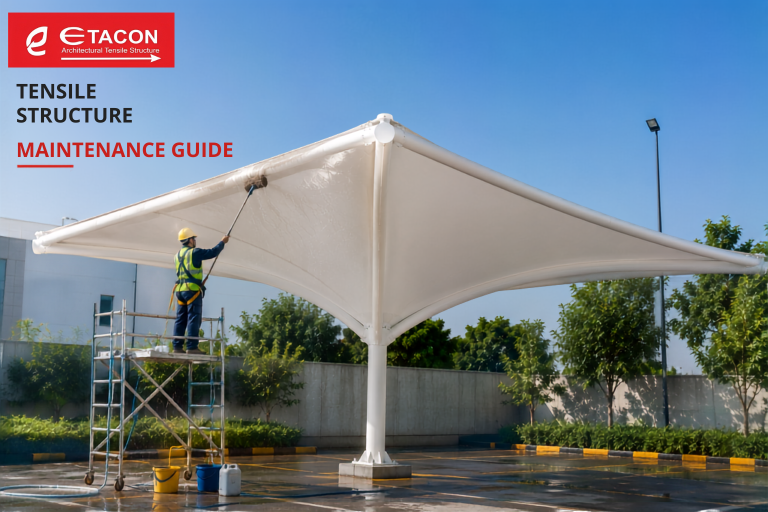
Dust and grime settle on tensile fabric the same way they settle on anything left outside. Give it a wash with water and a mild soap a few times a year, and it’ll keep looking the way it did on installation day.
One thing to avoid: harsh chemicals or stiff brushes. They can wear down the coating that protects the fabric, which ends up costing you more in the long run.
2. Give the Cables and Connections a Look
The tension in a tensile structure comes from its cables, fittings, and connectors. Over time, with weather and general movement, these can loosen a little. That’s completely normal.
What matters is catching it. A quick inspection twice a year is usually enough to spot anything that needs tightening before it turns into a real problem.
3. Keep an Eye Out for Wear
Small problems are cheap to fix. Big ones aren’t.
So every couple of months, take a walk around and really look at the fabric. Any small tears? Spots that look faded or discolored? Areas where the material seems to be stretching more than it should? Catching these early usually means a simple patch job instead of a full replacement down the line.
4. Don’t Let Drainage Points Clog Up
Most tensile structures are built with drainage in mind, so rainwater has somewhere to go instead of pooling on top. But leaves, dust, and general debris can block those points without you noticing.
After a heavy storm or a windy stretch of weather, it’s worth checking that everything’s still draining the way it’s supposed to.
5. Remember the Steel, Not Just the Fabric
It’s easy to focus all your attention on the fabric since that’s what you see first. But the steel frame underneath is doing just as much work.
Rust spots, chipped paint, corrosion near the joints and welds — these are worth checking for, especially as the structure ages. Catching them early keeps the whole thing structurally sound.
6. Trim Back Nearby Trees
A branch hanging close to your structure might look harmless enough. It usually isn’t.
Branches can scrape against the fabric on windy days. Fallen leaves clog up drainage. And during a storm, a weak branch is exactly the kind of thing that causes real damage. Trimming it back ahead of time saves you the headache later.
7. Bring in a Professional Once a Year
You can handle a lot of this yourself, but not everything. An experienced team will catch things an untrained eye might miss — subtle changes in tension, early signs of wear, small issues that don’t look like much yet but will eventually.
One professional inspection a year is usually enough to keep everything on track.
8. Deal With Small Repairs Right Away
A minor tear. A cable that’s a bit loose. A stain that won’t quite come out.
None of these feel urgent in the moment, which is exactly why they get ignored. But small issues left alone tend to turn into bigger, pricier ones. Fixing them as soon as you spot them is almost always the cheaper, easier path.
9. Keep Some Kind of Record
This one’s easy to skip, but it’s worth doing. Even a simple log of cleanings, inspections, and repairs helps you track how the structure is holding up over time — and it makes it a lot easier to notice patterns, like a drainage point that always clogs during the rainy season.
10. Stay Ahead of Problems Instead of Reacting to Them
Maintenance works best when you’re not waiting for something to go wrong before you act.
By the time a problem is visible, it’s usually already been developing for a while. A steady, proactive routine catches things early — long before they start affecting how the structure looks or performs.
Final Thoughts
Tensile structures are built to last, but they’re still out in the elements every day, and that takes a bit of upkeep. The good news is that upkeep doesn’t have to be complicated.
Clean it regularly. Check it a few times a year. Fix small things when they’re still small. That’s really most of it.
Stay consistent with these habits, and your structure will keep doing exactly what it was built for — giving you shade, protection, and a space people actually enjoy being in, for years to come.
About Etacon
At Etacon, our work doesn’t end when the installation is finished. We’ve spent more than 20 years helping our clients keep their tensile structures in great condition long after that first day.
If you’ve got questions about maintenance, or you think it might be time for a professional inspection, we’re happy to help.