Alright, so you’ve decided to go with a tensile structure. Good choice, honestly.
But now comes the part nobody talks about enough — the fabric.
Everyone gets excited about the design. The curves, the swoops, that dramatic architectural look tensile structures are known for. And sure, that stuff matters. But underneath all of it, there’s a piece of fabric doing the actual work of keeping your structure standing, dry, and looking decent five years from now.
Get the fabric wrong, and no amount of clever design saves you.
So let’s just go through this properly, one piece at a time.
First things first — what’s it actually for?
I know this sounds obvious, but you’d be surprised how many people skip this step.
A shade canopy over a kids’ play area doesn’t need to do the same job as a roof over a warehouse full of machinery. One just needs to block sun and let some breeze through. The other needs to survive rain, wind, maybe hail, and not leak a drop for years.
So before you even look at fabric samples, get clear on what this structure needs to survive and what it’s protecting.
Once that’s settled, everything else gets easier.
The main fabric types (and where they actually fit)
There’s no single “best” fabric. There’s only the best fit for your specific project.
PVC coated polyester is the workhorse of the industry. It’s budget-friendly, reasonably tough, and does a solid job on things like event canopies, parking shades, or mid-term structures that don’t need to last forever.
PTFE coated fiberglass is a step up, and honestly, it feels like it. This stuff is built for the long haul — decades, not years. It resists dirt buildup, holds its shape, and shrugs off harsh weather. Costs more upfront, but a lot of people find it pays for itself over time.
ETFE is the newer, trendier option. It’s light, lets natural light filter through nicely, and shows up a lot in modern architecture where the look matters just as much as the function.
None of these is objectively “better.” They’re just built for different jobs.
Don’t skip the climate conversation
Where is this thing actually going to sit?
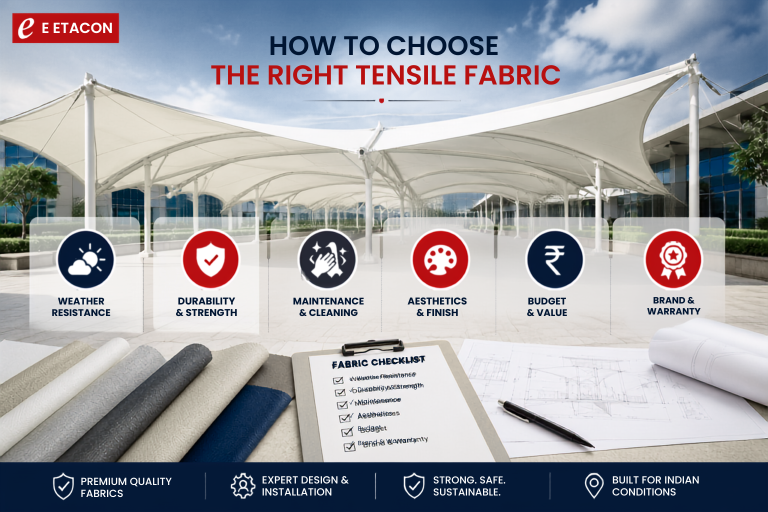
If your location gets brutal sun most of the year, UV resistance isn’t optional — it’s the difference between a fabric that lasts and one you’re replacing in three years.
If you’re somewhere with heavy rain, snow, or storms, waterproofing and tensile strength move to the top of the list.
And if you’re near the coast, don’t forget salt and humidity chew through weaker materials faster than people expect.
Basically, pick the fabric for the weather you’ll actually get, not the weather you’re hoping for.
Budget vs. how long you need it to last
Here’s something people don’t say enough — cheaper fabric isn’t always the wrong call.
If you’re setting up something temporary, like a booth for a trade show or a short-term event canopy, there’s genuinely no reason to spend on a fabric rated for 25 years of outdoor use.
But if this is permanent — a stadium roof, a commercial entrance canopy, something meant to stay put — going cheap usually costs more later. Repairs add up. Replacements add up faster.
So maybe don’t ask “what’s cheapest?” Ask “what actually gives me the most value across the life of this project?” Slightly different question, very different answer sometimes.
Looks matter more than people admit
Function comes first, sure, nobody’s arguing that.
But if this structure is sitting in front of a restaurant, a mall entrance, or a resort, how it looks is doing real work too. First impressions and all that.
Some fabrics come in a decent range of colors and finishes. Others are more limited but give you that clean, minimal look a lot of modern buildings go for.
One thing worth remembering — think about how it’ll look in year five, not just on day one. Fading, staining, that slightly grubby look some materials get over time. Ask about this before you commit, not after.
Fire and safety ratings — please don’t skip this
This one honestly gets overlooked way more than it should.
Depending on where you’re building, there could be fire safety codes your fabric needs to meet. Sometimes it’s a strict requirement, sometimes it’s more of a “you’ll wish you’d checked” situation.
Either way, confirm this early. It’s a five-minute conversation now versus a real headache later.
Talk to someone who’s done this before
You don’t have to become a fabric expert overnight.
A good tensile structure team has already been through this decision dozens of times, across dozens of projects. They know which fabric holds up in which climate, which one fits which budget, and which one’s going to look right for your space. That kind of experience is worth leaning on before you sign off on anything.
Final Thoughts
At the end of the day, choosing the right tensile fabric isn’t about grabbing the most popular option or the cheapest one on the list.
It comes down to knowing your project’s purpose, your climate, your budget, and how long you actually need this thing to last — and then finding the fabric that checks those boxes without cutting corners where it matters.
Take your time here. It’s not just a material choice. It’s the thing that decides how well your structure holds up, year after year.
About Etacon
Etacon has spent years working in tensile structure design and installation, and if there’s one thing that experience has taught the team, it’s that the right fabric choice makes or breaks a project long before installation day even arrives. From commercial canopies to large-scale industrial roofing, Etacon works closely with clients to figure out what actually fits their space, budget, and local conditions — not just what looks good in a catalog. Quality, safety, and long-term performance stay at the center of everything they build.