
Walk into any school or college during peak summer. Or the middle of monsoon season. You’ll notice the same problem everywhere.
Students huddle under whatever shade they can find. Assemblies get cancelled because of sudden rain. Outdoor sports periods get cut short or moved indoors.
It sounds like a small inconvenience on paper. But over a full academic year, it adds up. Lost time, real discomfort, and missed chances for kids to simply be outside.
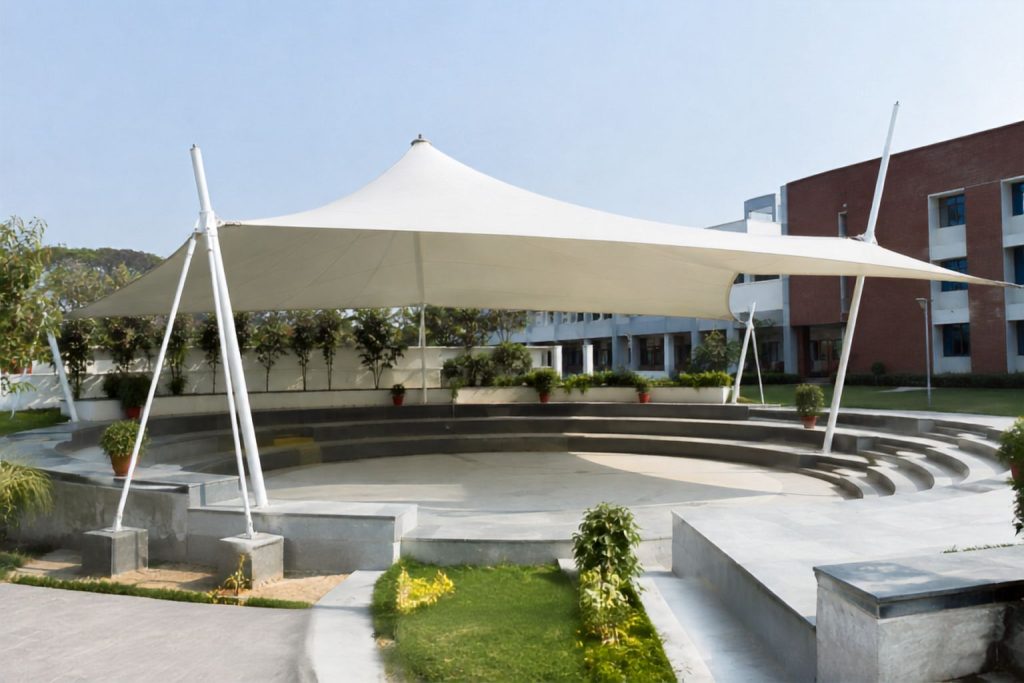
This is exactly where tensile structures have started changing the game. If you haven’t heard the term before, here’s a quick explanation. Tensile structures are fabric-based roofing systems held up by a tensioned membrane. Think of the flowing canopy shapes over stadium entrances or modern bus stops. Now, schools and colleges are using the same technology for playgrounds, walkways, and parking lots.
Why Campuses Are Switching to Tensile Roofing
A few years back, most institutions relied on RCC structures or basic tin sheds. Both come with baggage.
RCC construction is expensive. It also takes months to build. And once it’s up, you’re stuck with it — there’s no flexibility if the school wants to redesign the space later.
Tin sheds are cheaper, sure. But they turn into ovens under direct sun. And they get incredibly loud the moment it starts raining.
Tensile structures solve both problems at once. The PVC or PTFE fabric used in these canopies reflects solar heat instead of absorbing it. So the area underneath stays noticeably cooler than under a metal roof.
Plus, the material breathes and lets in filtered daylight. That means you skip the closed-in, artificial feeling you’d get under a solid concrete slab.
There’s a visual bonus too. A well-designed tensile canopy over an entrance or courtyard makes a campus look genuinely modern. For institutions that care about first impressions with parents and prospective students, that detail matters more than people admit.
Where They Actually Get Used on Campus
Playgrounds and sports courts. This is probably the most common application. Basketball courts, badminton courts, or general play areas covered with a tensile roof mean PE classes don’t get cancelled every time the sky turns grey.
Assembly and gathering areas. Schools that hold morning assemblies outdoors know how disruptive an unexpected drizzle can be. A tensile canopy over the assembly ground keeps things running, no matter the weather.
Parking and drop-off zones. Colleges with large parking areas use tensile shades to protect staff and student vehicles from sun and rain. This also extends the life of paint jobs and tyres.
Walkways connecting buildings. This one’s underrated. Covered walkways between hostel blocks, academic buildings, and canteens mean nobody’s sprinting through rain with a bag over their head every monsoon.
Cafeteria and canteen seating. Open-air dining areas covered with tensile fabric give students a pleasant space to eat. No heat, no risk of getting rained on mid-lunch.
The Cost and Maintenance Angle
This is usually the first question any school or college administration asks. And that’s fair — budgets in education are tight.
Compared to permanent concrete construction, tensile structures cost significantly less. They also install much faster, sometimes in just a couple of weeks depending on the span and design.
Maintenance is refreshingly low too. The fabric is UV-stabilised and weather-resistant. It typically holds up well for 10-15 years with only occasional cleaning and inspection. No repainting. No worrying about rust or leaks, unlike a traditional metal shed.
Design Flexibility Institutions Appreciate
Here’s what surprises a lot of school administrators: just how customizable these structures are.
Colours can match the institution’s branding. Shapes can be conical, curved, or angular, depending on the space. Spans can stretch to cover anything from a small reading nook to a full-sized football ground.
Architects working on campus redesigns often prefer tensile structures for one simple reason. They fit into an existing layout without demolishing anything. You’re adding shade and shelter, not tearing down and rebuilding.
A Few Things to Keep in Mind Before Installing
Getting the engineering right matters a lot here. A tensile structure’s strength depends heavily on correct tensioning and anchoring. So this isn’t a job for just any local contractor.
Instead, work with a company that specialises in tensile fabrication. Look for one with real experience on institutional projects. This choice affects how the structure performs over monsoons and years of heavy footfall.
It’s also worth checking wind-load ratings for your region. This matters even more if the campus sits in a coastal or high-wind area.
Final Thoughts
Education spaces are slowly moving past an old idea. That infrastructure has to be either purely functional or purely decorative. Tensile structures manage to be both.
They give students and staff comfortable, usable outdoor space through every season. They cut down on maintenance headaches for the administration. And they genuinely improve how a campus looks and feels.
So, if your school or college is planning an outdoor upgrade, this option is worth exploring. It beats defaulting to the usual RCC or tin-shed route.