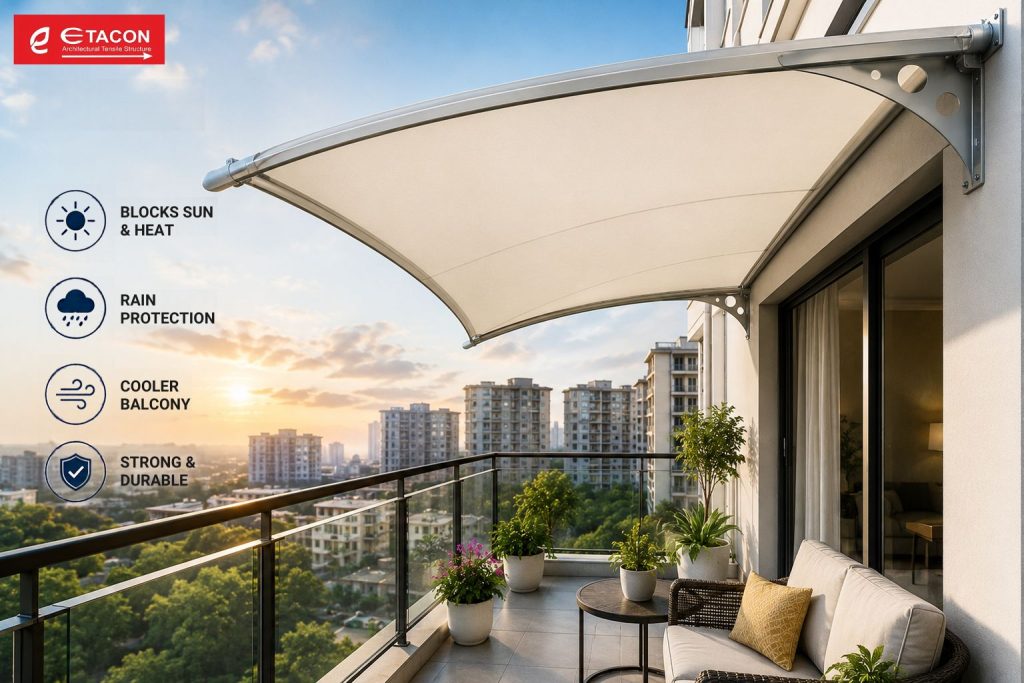
Quick answer: A balcony tensile shade is a custom-cut fabric canopy, usually PVC or PVDF-coated polyester, on a lightweight steel or aluminium frame that fixes to your balcony. It blocks direct sun and rain. It also cuts heat on the balcony and in the rooms behind it. Apartment owners should check society rules first, and a qualified installer should fix the frame to structural points only.
A homeowner in a Gurgaon high-rise once told us her west-facing balcony turned unusable from April to September. The sun hit it from noon onwards, the plants cooked, and the sliding door heated the living room. She had priced an awning and a polycarbonate sheet, and neither felt right. A tensile shade solved the heat and still looked clean from the street. That mix of practical and neat is exactly why more apartment owners ask about this option now.
At a Glance
- What it is: Tensioned fabric on a slim steel or aluminium frame that fits the exact size of your balcony.
- Best for: West- and south-facing balconies, terraces, rooftop seating areas, cafes with small outdoor space.
- Typical fabric: PVC-coated polyester for most homes, PVDF-coated polyester for longer life and easier cleaning.
- Main benefits: Heat reduction, rain cover, a softer light, and a modern look.
- Before you install: Get society or RWA permission, and confirm where the frame will fix.
Why Balconies Need Proper Shade
Balconies take the harshest sun in an apartment. Glass doors and railings reflect heat straight back into the rooms. A good shade stops that heat before it reaches the glass, which means your air conditioner works less.
Rain is the second problem. Monsoon spray soaks the floor, ruins furniture, and stops you from using the space for months. A tensile shade extends over the balcony edge and keeps most of that water out.
Light matters too. Fabric diffuses sunlight, so the balcony stays bright without the glare. You can sit there at noon without squinting.
Which Fabric Works Best on a Balcony
PVC-coated polyester suits most homes. It costs less, cuts well into small custom shapes, and handles Indian sun and rain for several years. Lighter colours reflect more heat, so white, cream, and light grey stay cooler than dark shades.
PVDF-coated fabric costs more, but it resists dust and stains better, and it lasts longer. If your balcony faces a busy road, the extra coating helps, because traffic dust sticks to plain PVC faster.
Avoid thin, cheap garden shade cloth. It sags, fades, and tears within a season or two, and it can’t handle a strong gust on a high floor.
Shapes and Styles That Work
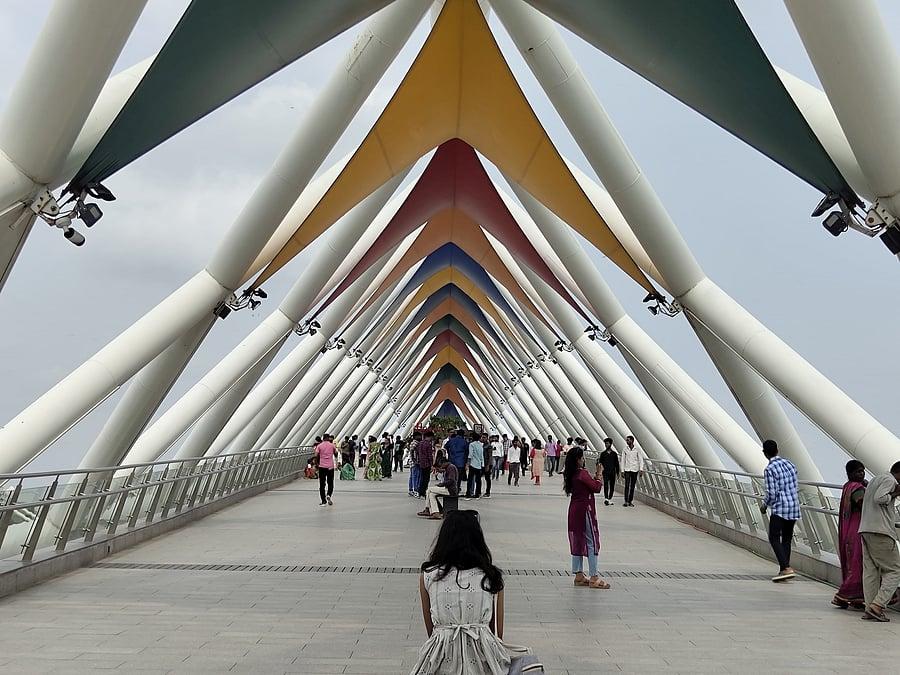
Most balconies use a simple curved or sloped canopy. It sheds rain well and looks tidy from outside. Cone and sail-style shapes suit larger terraces and corner balconies, where you can span a wider area.
Retractable options let you open the shade on a pleasant evening and close it during storms. They cost more and need regular care, so they suit owners who want that flexibility rather than a fixed roof.
Colour choice shapes the look from the street too. Many societies prefer neutral tones, so check before you pick a bold shade.
The Apartment Rules You Shouldn’t Skip
Most housing societies and RWAs have rules on external changes. A balcony shade changes the building’s appearance, so you usually need written permission first. Ask for the rules early, because some societies allow only specific colours or shapes.
Never let anyone drill into a beam or slab without checking the structure. A qualified installer fixes the frame to approved structural points, and uses anchors suited to your wall type. This matters most on higher floors, where wind loads climb fast.
Wind deserves real attention. A balcony on the 15th floor faces far stronger gusts than one on the second. An engineer should size the frame and tensioning for your floor height, not for an average case.
What Affects the Cost
Small jobs cost more per square foot than large ones, because design, site visit, and fabrication costs spread over less area. Custom shapes take more cutting and framing time. Higher floors need extra safety measures and sometimes special access gear.
Fabric type, frame material, and finish all move the price. Ask for a written quote that names the fabric, the frame, the anchors, and the warranty. Our guide on how to read a tensile structure quotation walks through each line.
Care and Maintenance
Rinse the fabric with plain water and a soft brush every few months. Skip harsh chemicals and high-pressure jets, because they strip the coating. Check the fixing points after each monsoon, and tighten anything that looks loose.
A well-made balcony shade usually runs for years without drama. Small tears are easy to patch, and a fabric refresh later costs far less than building a new structure.
Frequently Asked Questions
Can I install a tensile shade on an apartment balcony? Yes, in most cases. Get written permission from your society or RWA first, and make sure the installer fixes the frame to structural points only.
How long does a balcony tensile shade last? PVC-coated fabric usually lasts several years on a balcony, and PVDF-coated fabric lasts longer. Regular rinsing and an annual check of the fixing points extend the life.
Will a tensile shade keep my balcony cooler? Yes. Fabric blocks direct sun before it hits the glass door, and lighter colours reflect more heat. Rooms behind the balcony stay cooler as a result.
Can a tensile shade handle strong wind on a high floor? It can, if an engineer designs it for your floor height and wind exposure. Always ask the installer how they sized the frame and fixings.
Is a tensile shade better than a polycarbonate sheet? For most balconies, yes. Fabric stays cooler, runs quieter in rain, and doesn’t yellow under sun the way polycarbonate does. You can read the full comparison in our guide on tensile structures versus polycarbonate roofing.
Final Thought
A balcony tensile shade works best when you treat it as a small engineering job, not a decoration. Pick the right fabric, check your society’s rules, and insist on proper fixing points. Do those three things, and you get a balcony you can actually use in peak summer and heavy monsoon. For background on how tensioned fabric structures work, the tensile structure overview on Wikipedia is a useful read.
About Etacon
Etacon is a tensile structure manufacturer based in Gurugram, Delhi NCR. The company has been making tensile structures and canopy solutions since 2004, and it works on residential, commercial, industrial, and public projects across India. Etacon designs, fabricates, and installs car parking shades, entrance canopies, walkway covers, gazebos, facades, and custom tensile shades for balconies and terraces. You can explore the full range on the Our Products page, or read about the design and installation process on the Our Services page.
Contact Etacon
Etacon: Architectural Tensile Structure Ground Floor, 606/2A, Sector 37, Pace City I, Sector 10A, Gurugram, Haryana 122001 Phone: +91-9873310328, +91-9818048428, 0124-4266119 Email: sales@etacon.co.in Website: etacon.co.in Managing Director: Mr. Prabhu Patil
Call or email with your balcony size and photos, and the team will advise on fabric, shape, and fixing options.
Keywords: balcony tensile shade, balcony shade for apartments, tensile shade for terrace, balcony canopy India, balcony sun shade, tensile fabric balcony cover, balcony rain cover, apartment balcony shade permission, tensile structure Gurugram, tensile structure manufacturer Delhi NCR